
Author Archives: supremelaws

Uniform Civil Code and Women’s Equality – A Continuing Constitutional Debate

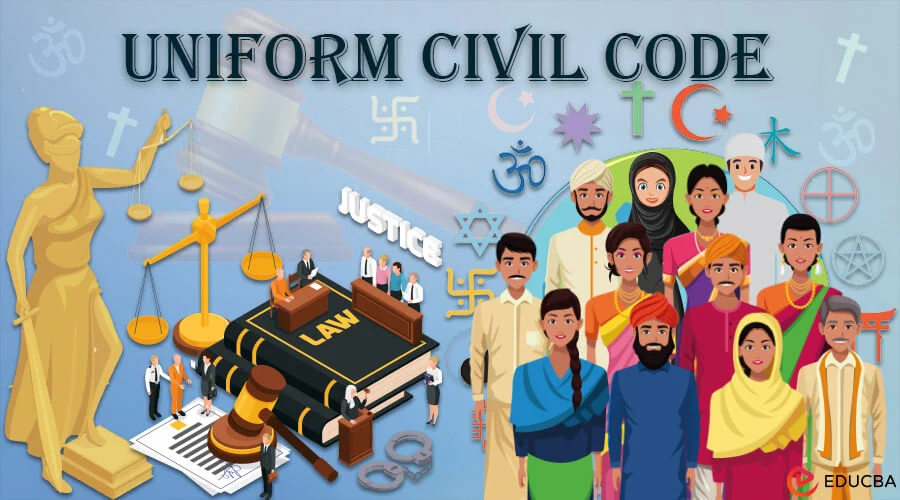
The debate around the Uniform Civil Code (UCC) has once again gained national attention following recent observations by the Supreme Court of India while hearing a plea challenging certain inheritance provisions under Shariat Law. The petition argues that the current framework results in unequal inheritance rights for Muslim women, raising concerns about constitutional guarantees of equality.

The issue highlights the constitutional vision of Article 44 of the Constitution of India, which encourages the State to work toward a Uniform Civil Code. While personal laws developed from religious and cultural traditions, the modern legal discourse increasingly questions whether these frameworks align with the equality principles under Article 14 of the Constitution of India and the non-discrimination mandate of Article 15 of the Constitution of India.

According to Gaurav Goel, Senior Partner at Supreme Laws, the debate should be approached with constitutional balance and social sensitivity. He states that the aim of legal reform should be to harmonize personal laws with constitutional principles while respecting India’s pluralistic character, emphasizing that the UCC debate should focus on strengthening equal civil rights rather than framing it as a conflict between religion and law.

India’s legal system has already taken steps toward gender justice, notably in

Sayara Bano v. Union of India, where instant triple talaq was declared unconstitutional. Such judicial developments reflect the Constitution’s evolving commitment to protecting women’s rights within personal law frameworks.

Gaurav Goel further notes that fair inheritance rights are crucial for women’s economic security and dignity. Property and inheritance rights, he emphasizes, are closely linked with financial independence and meaningful social participation.

At the same time, implementing a Uniform Civil Code in a diverse nation like India remains a complex legislative process. Any reform must involve careful consultation, gradual legal evolution, and broad public consensus to ensure constitutional ideals are achieved without disturbing social harmony.

The current judicial discussion has therefore revived an important national question—whether India is ready to move toward a more harmonized civil law framework that ensures equal rights for women across communities. As Gaurav Goel concludes, the ultimate objective should be to ensure that the constitutional promise of equality is reflected in every sphere of civil life.

Building a Successful Career in the Judiciary: Guidance for Young Lawyers

Entering the legal profession with the dream of serving in the judiciary is both an honourable and demanding aspiration. For young lawyers, success in this field requires discipline, knowledge, integrity, and a deep understanding of the law. The journey toward becoming a respected judicial officer or legal professional begins with a strong commitment to learning and professional ethics. Gaurav Goel, an accomplished and astute lawyer and Senior Partner, Supreme Laws, aptly says, “The foundation of a successful judicial career is built on honesty, discipline, and an unwavering commitment to justice.”

Another important aspect often overlooked by young lawyers is practical exposure to the functioning of courts and the justice delivery system. Merely studying statutes and judgments is not enough; aspiring judicial officers must also observe how law operates in real life. Attending court proceedings, preparing concise case summaries, assisting senior advocates, and participating in Lok Adalats or legal aid initiatives provide invaluable learning opportunities. Such experiences help young lawyers interact with litigants from diverse social and economic backgrounds and understand the human side of legal disputes.

Through these engagements, lawyers gradually develop empathy towards human errors, sensitivity to social realities, and the ability to appreciate the behavioral patterns of individuals and communities. Exposure to settlement forums like Lok Adalat also teaches the importance of conciliation, fairness, and practical problem-solving, which are essential qualities for a good judge. Understanding how social changes influence legal conflicts further sharpens a lawyer’s perspective and judgment. These practical experiences ultimately build the foundational judicial temperament, balanced reasoning, and social awareness required for developing true judicial acumen.

The first step for any aspiring lawyer is to develop a strong command over fundamental laws and legal procedures. A thorough understanding of constitutional principles, civil and criminal laws, and procedural statutes forms the backbone of judicial competence. Regular reading of case laws and judgments helps young lawyers develop analytical thinking and legal reasoning. Gaurav Goel emphasizes this point by stating, “A young lawyer must treat every judgment read and every statute studied as a stepping stone toward becoming a better legal mind.” Equally important is the development of research and drafting skills. Judiciary examinations and professional legal practice both demand precise interpretation of law and clear articulation of legal arguments.

Budding lawyers should cultivate the habit of reading legal commentaries, writing case summaries, and participating in moot courts or legal discussions. According to Tarlok Singh, a lawyer, “Legal knowledge becomes truly powerful only when a lawyer can present it with clarity, logic, and confidence.” Another essential factor in building a successful career in the judiciary is maintaining strong ethical values. Judges and legal professionals are entrusted with the responsibility of upholding justice and public trust. Young lawyers must therefore adhere to high standards of professional.

Role of Banks Under the SARFAESI Act: Ensuring Swift and Effective Recovery of Non-Performing Assets

The banking sector forms the backbone of the financial system, and timely recovery of loans is essential for maintaining economic stability. In India, the SARFAESI Act, 2002 provides banks and financial institutions with a powerful legal mechanism to recover dues without prolonged court proceedings. Among its provisions, Section 13(2) and Section 13(4) play a crucial role in empowering banks to enforce their security interests in cases of loan default.

Senior Partner Advocate Gaurav Goel explains that when a borrower fails to repay a loan and the account is classified as a Non-Performing Asset (NPA), banks can initiate recovery proceedings under the SARFAESI Act. The process begins with the issuance of a demand notice under Section 13(2), requiring the borrower to clear the outstanding liability within 60 days. The notice specifies the amount due and identifies the secured assets that may be enforced in case of non-payment.

The purpose of Section 13(2) is to provide borrowers with a fair opportunity to regularize their accounts and avoid enforcement action. During this period, borrowers are allowed to submit representations or objections, which the bank must examine and respond to as per statutory requirements. This mechanism ensures transparency and procedural fairness while protecting the lender’s interests.

However, if the borrower fails to comply with the demand notice within the stipulated period, the bank may proceed under Section 13(4) of the Act. This provision authorizes banks to take possession of secured assets, take over the management of the secured business, appoint a manager for the secured assets, or sell the secured property to recover outstanding dues.

As observed by Banking Lawyer Tarlok Singh, “The SARFAESI Act has significantly strengthened the position of secured creditors by enabling banks to enforce their security interests without lengthy civil litigation.” According to him, “strict compliance with the statutory procedure under Sections 13(2) and 13(4) is essential to ensure that recovery actions remain legally sustainable.” He further notes that “the objective of SARFAESI proceedings is not merely recovery but also maintaining financial discipline and protecting public money entrusted to banks.”

Before the enactment of the SARFAESI Act, banks were often compelled to pursue long civil litigation processes for debt recovery, resulting in substantial delays and financial losses. By allowing lenders to directly enforce their security interests, the Act has significantly strengthened the credit recovery ecosystem and encouraged responsible borrowing.

At the same time, the law maintains a balanced approach by providing borrowers with legal remedies. Any borrower aggrieved by measures taken under Section 13(4) may approach the Debt Recovery Tribunal (DRT) under Section 17 of the Act, ensuring judicial oversight of enforcement actions.

Effective implementation of SARFAESI proceedings requires strict legal compliance and careful handling of procedural requirements. Proper drafting of demand notices, lawful possession procedures, and adherence to statutory timelines are essential to ensure that recovery actions withstand judicial scrutiny.

Legal Essentials Every Startup Should Know Before Starting Buisness

Legal Essentials Every Startup Should Know Before Starting Buisness

The success of a startup lies in the vision and passion of its founders, who strive to craft distinctive solutions that offer real value and unmatched customer experience. But amidst the rush to build your product, brand, or team, it’s easy to overlook crucial legal requirements that form the backbone of a sustainable enterprise. Ignoring these essentials can lead to costly disputes, compliance penalties, or even the collapse of your venture before it truly begins.

From creating a founders’ agreement to protecting your brand and managing contracts, every entrepreneur should know the basic laws that apply to their business. Staying updated with legal rules helps avoid trouble and keeps the startup on the right track. Here are some key legal points every Indian startup should know before starting or turning an idea into a business.

  1. Choose the Right Business Structure

Your business structure determines your tax obligations, personal liability, and ability to raise capital. Common options include a sole proprietorshippartnershiplimited liability company (LLC), or corporation. Consulting a business attorney can help you select the structure that best protects your interests.

  1. Protect Your Intellectual Property

Your brand name, logo, product design, or software are valuable assets. Registering trademarkscopyrights, or patents ensures that your ideas remain yours and prevents competitors from copying your work.

  1. Draft Solid Founders’ and Partnership Agreements

A handshake isn’t enough when building a company with others. Clearly define ownership percentages, decision-making authority, roles, and exit strategies in writing. Well-drafted agreements prevent misunderstandings and protect relationships as your business grows.

  1. Understand Your Compliance and Licensing Requirements

Depending on your industry and location, you may need licenses, permits, or regulatory approvals. Failing to comply with local, state, or federal regulations can lead to costly penalties or even business closure.

  1. Adhering to labour laws

Labour laws are important for every startup, big or small, and following them is mandatory. Once your company is set up and you start hiring employees, you must comply with various labour regulations, no matter the size of your business. The few labour laws applicable under this scheme are:

  • The Industrial Disputes Act, 1947
  • The Payment of Gratuity Act, 1972
  • The Trade Unit Act, 1926
  • The Employees’ State Insurance Act, 1948.
  • The Contract Labour (Regulation and Abolition) Act, 1970
  • The Industrial Employment (Standing Orders) Act, 1946
  • The Employees’ Provident Funds and Miscellaneous Provisions Act, 1952
  1. Protect Yourself With Proper Contracts

From supplier agreements to client contracts, every deal should be put in writing. Clear, enforceable contracts reduce the risk of disputes and protect your rights in case something goes wrong.

  1. Understanding taxation and accounting laws

Taxes are an essential part of every startup. Entrepreneurs should understand the applicable tax laws before starting their business. Depending on the type and location of the business, central, state, and local taxes may apply. Since different sectors attract different taxes, knowing these in advance can help in better planning and compliance.

  1. Plan for Employment and Data Privacy Laws

If you’re hiring employees or contractors, you must follow employment laws, including wage, benefits, and anti-discrimination rules. Additionally, ensure you comply with data protection laws to safeguard customer information.

Saurav Goyal, a top corporate lawyer in Chandigarh, said that launching a startup without legal guidance is like sailing without a map. An experienced business attorney can help you anticipate challenges, avoid costly mistakes, and build a strong foundation for long-term success.

Tarlok Singh, the best corporate lawyer in Chandigarh, says that whether it is a startup company or a well-established firm, adhering to legal requirements is very important for everyone. Hiring a corporate law firm or a legal counsel to provide advice is one of the best ways to ensure that your startup business is always safe and does not face legal complications and consequences.

How to Get Divorce in India: A Simple Guide

Divorce is a difficult and emotional process, and navigating the legalities can feel overwhelming. If you’re considering a divorce in India, understanding the basic legal framework is the first crucial step.Here’s a simplified look at how to get a divorce in India, outlining the two main types of divorce and their respective procedures.

The Two Paths to Divorce

Himanshi Garg, a divorce lawyer in Chandigarh, says that in India, divorce proceedings are primarily governed by the Hindu Marriage Act, 1955, for Hindus, Sikhs, Jains, and Buddhists, while other communities have their own personal laws (like the Indian Divorce Act for Christians and the Parsi Marriage and Divorce Act for Parsis). Regardless of the specific law, there are two ways to get the divorce:

  1. Mutual Consent Divorce (Section 13B of the Hindu Marriage Act)

This is the easiest & quickest way to get a divorce. It applies when both the husband and wife agree to the separation and have amicably settled all related issues.

  • Key Requirements:
    • You should be living separately for one year period or more.
    • Both parties must agree that they are unable to live together and have mutually decided to dissolve the marriage.
    • You must reach a consensus on all matters, including alimony, child custody, and the division of assets.
  • The Process:
    • First Motion: A joint divorce petition is filed in the Family Court. Both parties appear before the judge to record their statements and verify their consent.
    • Cooling-Off Period: After the first motion, the court mandates a cooling-off period, typically six months, to give the couple a chance to reconsider their decision. The Supreme Court has, in certain cases, allowed for the waiver of this period.
    • Second Motion: If the couple still wants to proceed after the cooling-off period, they file a second motion. They appear before the court again to reaffirm their consent.
    • Final Decree: If the court is satisfied, it issues a final divorce decree, officially dissolving the marriage.
  1. Contested Divorce (Section 13 of the Hindu Marriage Act)

A contested divorce is a more complex process that occurs when only one spouse wants to get a divorce, or when both parties cannot agree on the terms of the separation. The party seeking the divorce must prove a specific legal ground for the dissolution of the marriage.

  • Common Grounds for a Contested Divorce:
    • Cruelty: This includes both physical and mental cruelty that causes harm or endangers the life, limb, or health of the other spouse.
    • Adultery: When one spouse has voluntary sexual intercourse with a person other than their spouse.
    • Desertion: When one spouse has abandoned the other for a continuous period of at least two years without a valid reason.
    • Conversion: When one spouse converts to another religion.
    • Mental Disorder: When a spouse is suffering from an incurable mental illness or disorder that makes it unreasonable to expect the other to live with them.
    • Venereal Disease: When a spouse is suffering from a communicable venereal disease.
  • The Process:
    • Filing a Petition: The spouse seeking the divorce files a petition in the Family Court, outlining the specific grounds and providing evidence.
    • Summons and Reply: The court issues a summons to the other spouse (the respondent), who then has an opportunity to file a reply, accepting or denying the allegations.
    • Mediation: The court often refers the parties to mediation to attempt an amicable resolution.
    • Evidence and Hearings: If mediation fails, the case proceeds to trial. Both sides present evidence, examine witnesses, and engage in cross-examination to prove their claims.
    • Final Decree: After hearing all arguments and reviewing the evidence, the judge passes a final decree, either granting or denying the divorce. This process can be lengthy, often taking two to five years or more.

How a Lawyer Can Help

While it’s technically possible to file for divorce without a lawyer, it’s highly advisable to seek legal counsel. A qualified divorce lawyer can:

  • Explain your rights and obligations under the relevant personal laws.
  • Draft and file all necessary petitions and documents, ensuring they are legally sound.
  • Represent you in court and handle all legal proceedings.
  • Negotiate settlements on your behalf, especially in matters of alimony, child custody, and property.

Navigating a divorce can be a complex and emotionally charged journey. Having the right legal guidance can make the process clearer and less stressful and can help ensure the best outcome.


Disclaimer

As per the rules of the Bar Council of India, we are not permitted to solicit work or advertise in any manner. By proceeding further and clicking on “I Accept” below, the user acknowledges that the transmission, receipt or use of the information on our website does not tantamount to solicitation, advertisement, inducement or personal communication of any sort for and on behalf of the Firm so as to create an attorney-client relationship.

The information provided herein should not be interpreted as legal advice, for which the user must make independent inquiries. Whilst every effort has been taken to ensure the accuracy of the contents of this website, Supreme Laws disclaims all liability arising from reliance placed by the user or any other third party on the information contained therein.