

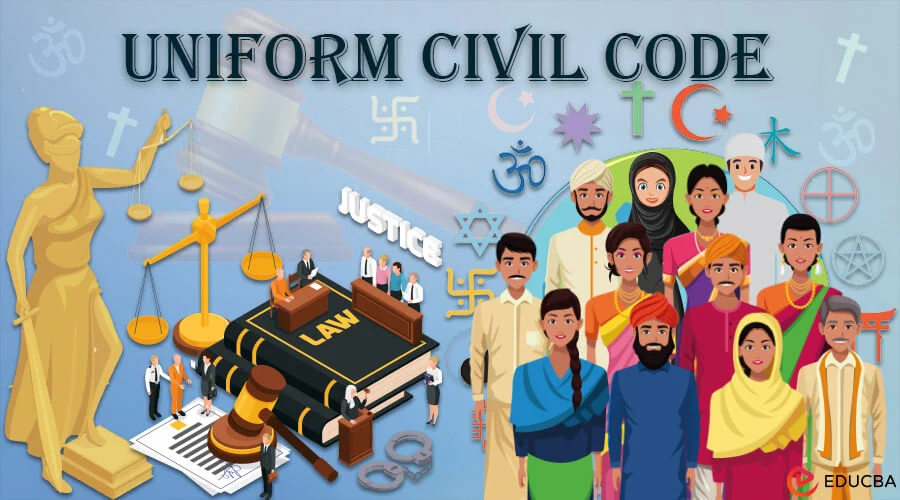
The debate around the Uniform Civil Code (UCC) has once again gained national attention following recent observations by the Supreme Court of India while hearing a plea challenging certain inheritance provisions under Shariat Law. The petition argues that the current framework results in unequal inheritance rights for Muslim women, raising concerns about constitutional guarantees of equality.
The issue highlights the constitutional vision of Article 44 of the Constitution of India, which encourages the State to work toward a Uniform Civil Code. While personal laws developed from religious and cultural traditions, the modern legal discourse increasingly questions whether these frameworks align with the equality principles under Article 14 of the Constitution of India and the non-discrimination mandate of Article 15 of the Constitution of India.
According to Gaurav Goel, Senior Partner at Supreme Laws, the debate should be approached with constitutional balance and social sensitivity. He states that the aim of legal reform should be to harmonize personal laws with constitutional principles while respecting India’s pluralistic character, emphasizing that the UCC debate should focus on strengthening equal civil rights rather than framing it as a conflict between religion and law.
India’s legal system has already taken steps toward gender justice, notably in
Sayara Bano v. Union of India, where instant triple talaq was declared unconstitutional. Such judicial developments reflect the Constitution’s evolving commitment to protecting women’s rights within personal law frameworks.
Gaurav Goel further notes that fair inheritance rights are crucial for women’s economic security and dignity. Property and inheritance rights, he emphasizes, are closely linked with financial independence and meaningful social participation.
At the same time, implementing a Uniform Civil Code in a diverse nation like India remains a complex legislative process. Any reform must involve careful consultation, gradual legal evolution, and broad public consensus to ensure constitutional ideals are achieved without disturbing social harmony.
The current judicial discussion has therefore revived an important national question—whether India is ready to move toward a more harmonized civil law framework that ensures equal rights for women across communities. As Gaurav Goel concludes, the ultimate objective should be to ensure that the constitutional promise of equality is reflected in every sphere of civil life.