

India stands at a pivotal moment in its legal evolution, as discussions intensify around the implementation of new criminal laws such as the Bharatiya Nyaya Sanhita and the broader reform agenda embodied in the Jan Vishwas Bill. These developments signal a conscious shift toward modernizing the justice system, making it more efficient, humane, and aligned with contemporary societal needs. For decades, India’s legal framework has carried remnants of colonial-era thinking, often emphasizing punishment over reform. Today’s reforms attempt to rebalance that equation by focusing on justice delivery that is both swift and fair, while also reducing the burden on courts clogged with minor cases.
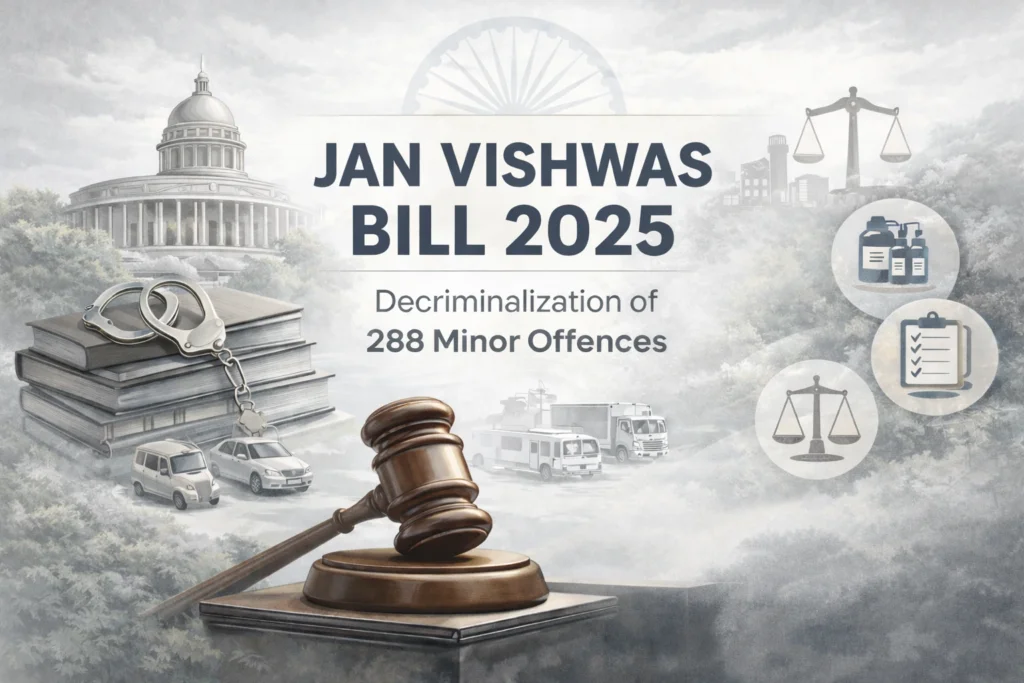
One of the most significant aspects of this reform movement is the push toward decriminalisation of minor offenses across 79 laws under the Jan Vishwas Bill. By removing criminal penalties for relatively trivial infractions and replacing them with civil penalties or administrative measures, the government aims to foster a more business-friendly and citizen-centric environment. This shift is particularly important for small entrepreneurs and ordinary citizens who often find themselves entangled in lengthy legal battles for minor technical violations. Decriminalisation not only reduces fear and compliance burdens but also allows law enforcement agencies and courts to focus their resources on serious crimes that genuinely threaten public safety and order. As legal analyst and senior partner, Supreme Laws Gaurav Goel, notes, “Decriminalisation is not about diluting accountability, but about ensuring that the punishment fits the nature of the offense in a rational and progressive manner.”
At the same time, the introduction of new criminal codes like the Bharatiya Nyaya Sanhita reflects an effort to redefine criminal procedure in a way that is more responsive to present-day challenges. These laws aim to streamline processes, incorporate technology, and ensure greater accountability in investigations and trials. However, their success will depend heavily on effective implementation, training of law enforcement personnel, and public awareness. Legal reform is not just about rewriting statutes—it is about changing mindsets, institutional culture, and ensuring that the spirit of the law translates into real-world outcomes. Gaurav Goel, further emphasizes, “For these reforms to succeed, capacity building at every level of the justice system is essential, otherwise even the most forward-looking laws may struggle in execution.”
Despite the challenges ahead, these ongoing discussions inspire cautious optimism. A justice system that prioritizes fairness over fear, efficiency over delay, and reform over retribution has the potential to transform the relationship between citizens and the state. Echoing this sentiment, policy analyst and advocate Tarlok Singh remarks, “These reforms reflect a maturing democracy that is ready to trust its citizens and move toward a more balanced and humane legal framework.” If implemented thoughtfully, these changes could mark the beginning of a more progressive legal era—one that empowers individuals, supports economic growth, and upholds the dignity of every citizen. There is genuine hope that such measures will help build a stronger, more just, and inclusive India, paving the way for a progressive society where law becomes a facilitator of growth rather than a barrier.